
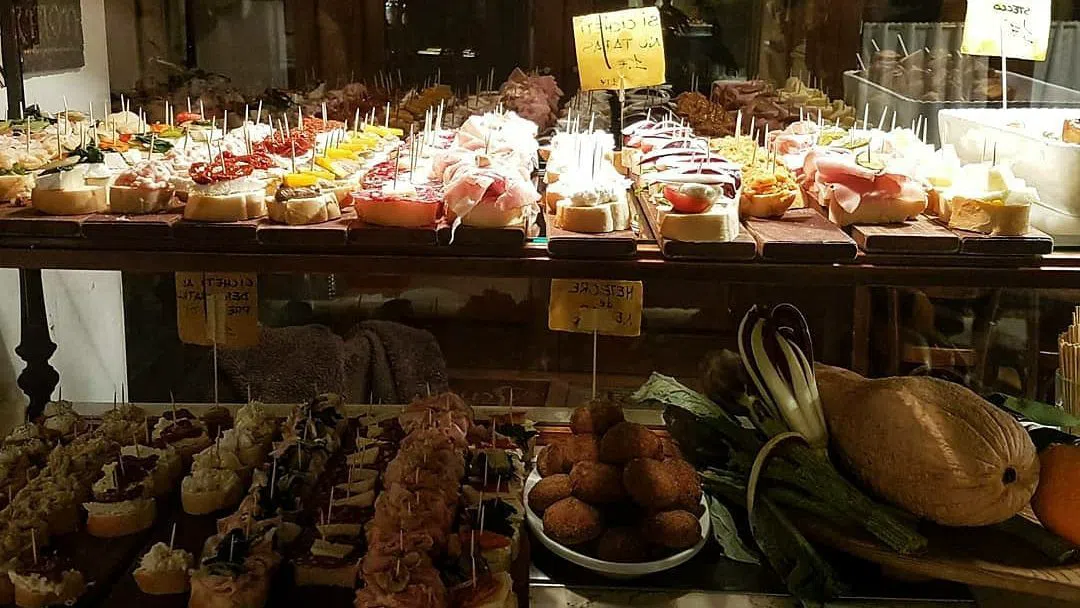
Nobody in Venice sits down to drink. They stand at a marble counter, order an ombra of wine for the price of a coffee, eat something small off a toothpick, and move to the next place before the crowd gets thick. That is the entire choreography of a cicchetti crawl, and it runs on a clock most visitors never learn — half these bars are shuttered by 8:30pm, which means the difference between a good night and a wasted one is knowing exactly when to walk in.
This route is built in the order Venice actually drinks in: early anchors that close before dinner, standing bacari for the aperitivo crush, canal-side stops with actual seating, a grease-and-carbs interlude, sit-down upgrades if you want a real meal, and one place that stays open until 2am for whoever's still standing. Follow it loosely — Venice punishes rigid itineraries — but respect the closing times, because there's no second seating.
Before 7pm: The Bacari That Won't Wait for You
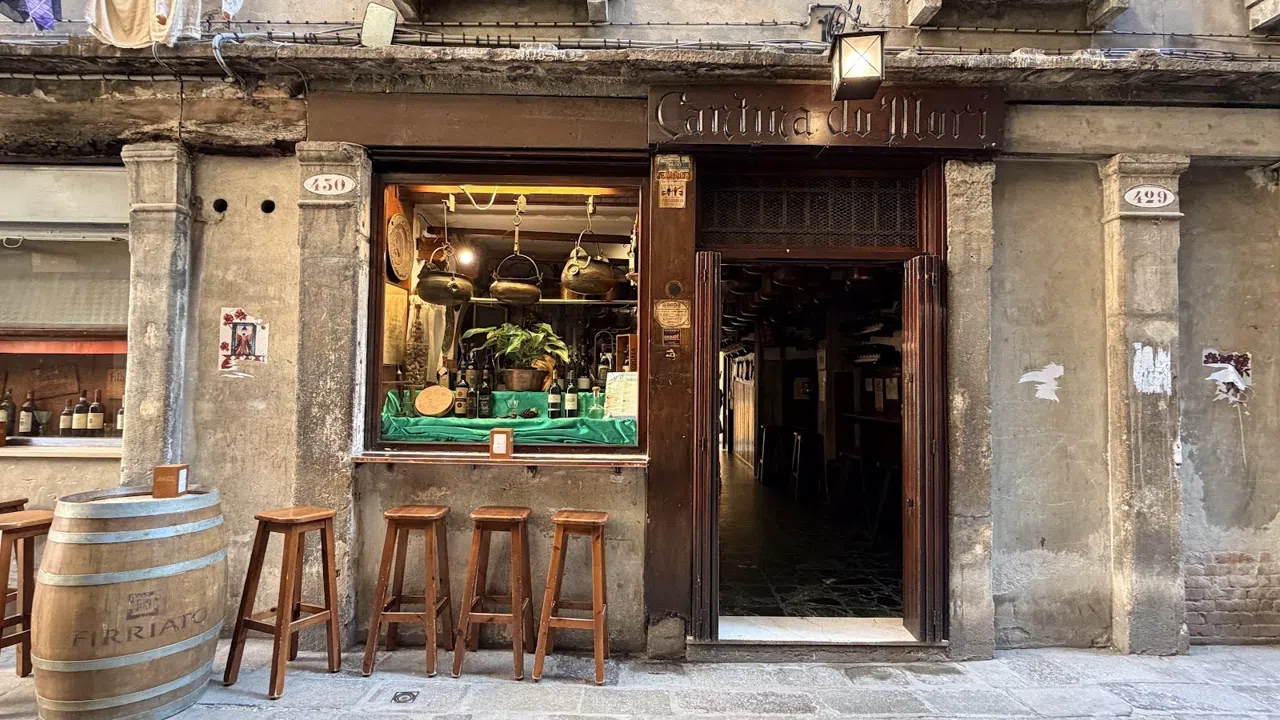
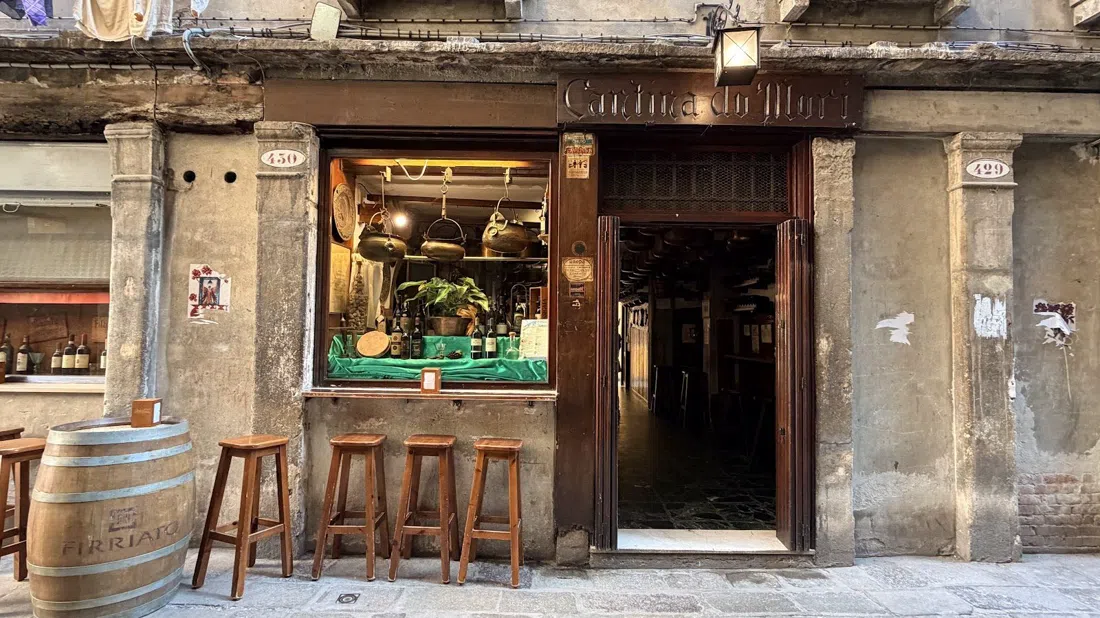
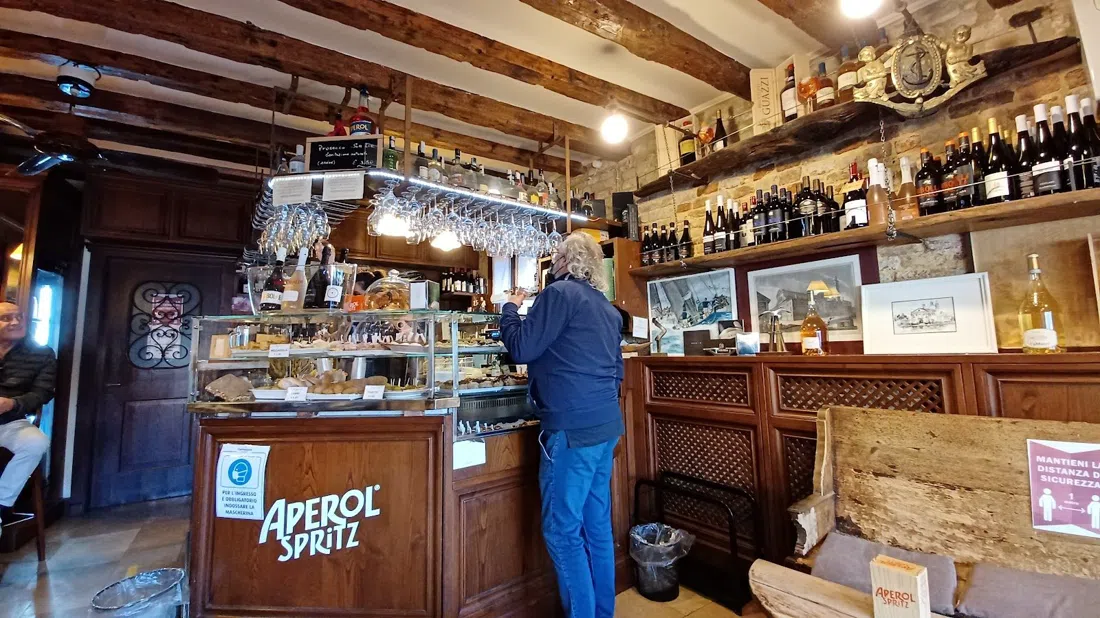
Start at Cantina Do Mori (San Polo, just off the Rialto market), Venice's oldest bacaro and the only non-negotiable stop on this list. It's standing room only — comfortable for two to four people wedged at the tiny copper-topped counter, genuinely difficult for a group of six to occupy at once — and it closes by 8pm and shuts entirely on weekends. Cicchetti run €2-4, wine from €1.50 a glass. Go first, go early, and don't linger past your second round if there's a queue behind you, which there usually is by 6:30pm.
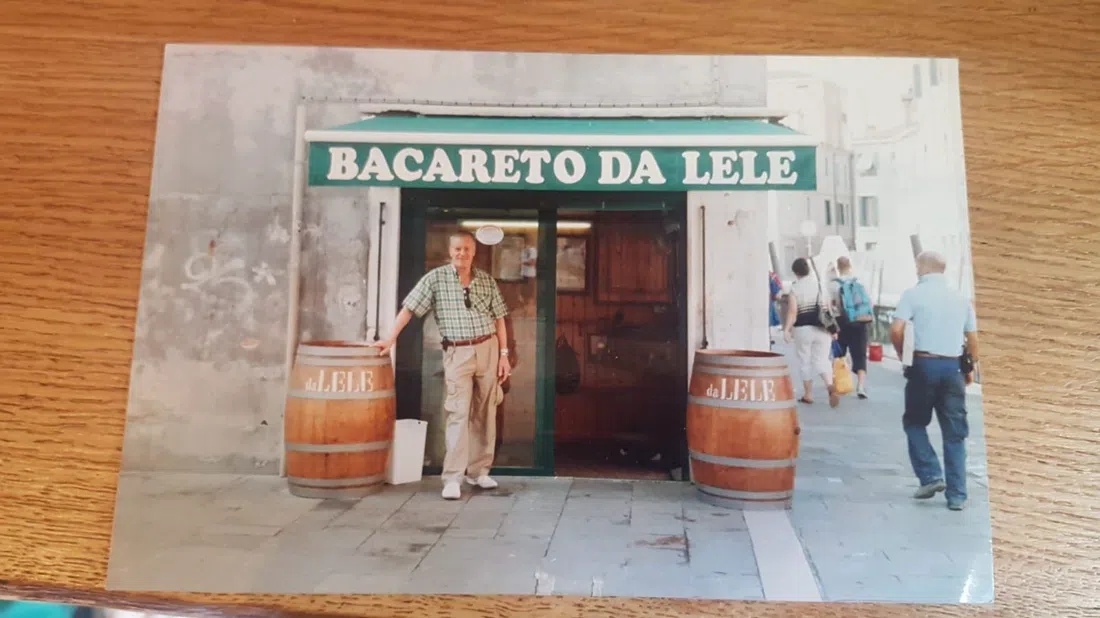
From there, cut toward Santa Croce for Bacareto da Lele (near Piazzale Roma), the cheapest and rawest stop on the entire route. No seating — everyone drinks standing on the street outside — and it's chaos at peak hours, a genuine crush of dock workers, students and old men who've been coming for decades. Wine is €0.60-1.50 a glass, panini €1-1.80. It closes by 8pm on weekdays and doesn't open Sunday at all, so if it's not on your way early, skip it rather than force a detour.
In Dorsoduro, Osteria al Squero (Rio di San Trovaso) rewards the same early discipline. There's no seating, just a rail along the canal where you perch with your glass, but it delivers the best view-to-drink ratio in the city — you're looking straight across at a working gondola boatyard. Cicchetti run €1.50-3, wine €2-4. Open Monday to Friday until 8:30pm, Saturday afternoons only, closed Sunday. Build it into the front half of your evening or not at all.
The Standing Crowd: Where Venetians Actually Do Aperitivo
Once the early closers are behind you, the evening properly starts at Al Mercà (Campo Bea Giacomo, by the Rialto market), a standing-only wine bar with zero seating of any kind. This is where young Venetians — not tourists — do their actual aperitivo, spilling out onto the campo with plastic cups of wine at €1.50-2.50 a glass and cicchetti at a flat €2. It works well for a group happy to cluster outside, badly for anyone who needs to sit. Friday and Saturday it stays open until 9:30pm, later than almost anything else on this list, which makes it a good mid-crawl reset point.
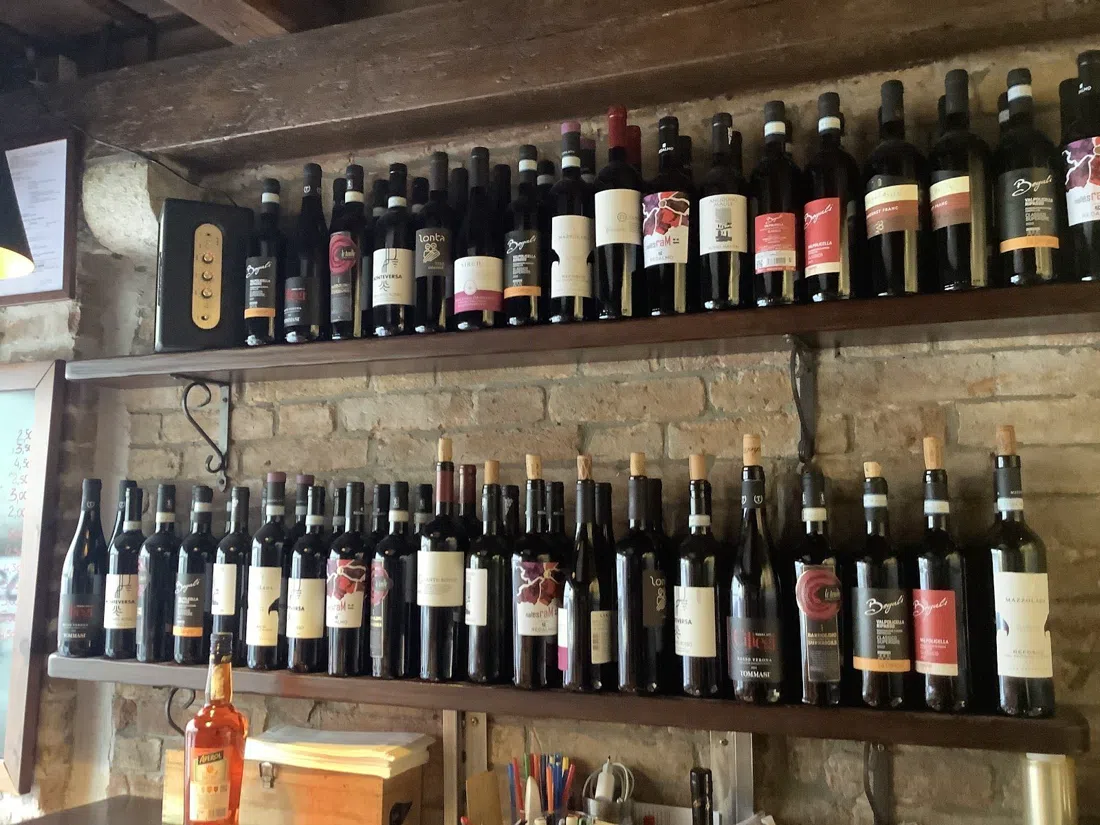
Across town in Dorsoduro, Cantine del Vino già Schiavi — everyone just calls it the Cantinone — sits directly on a canal near Ponte San Trovaso with no interior seating, just a ledge to lean on outside. Three generations of the same family have run it, and the cicchetti toppings are inventive in a way nothing else on this list matches — don't expect the standard baccalà-and-crostini formula. Groups of three to five cluster comfortably on the ledge; anything bigger splits naturally. €2-3.50 per cicchetto, wine from €2. Open until 8:30pm.
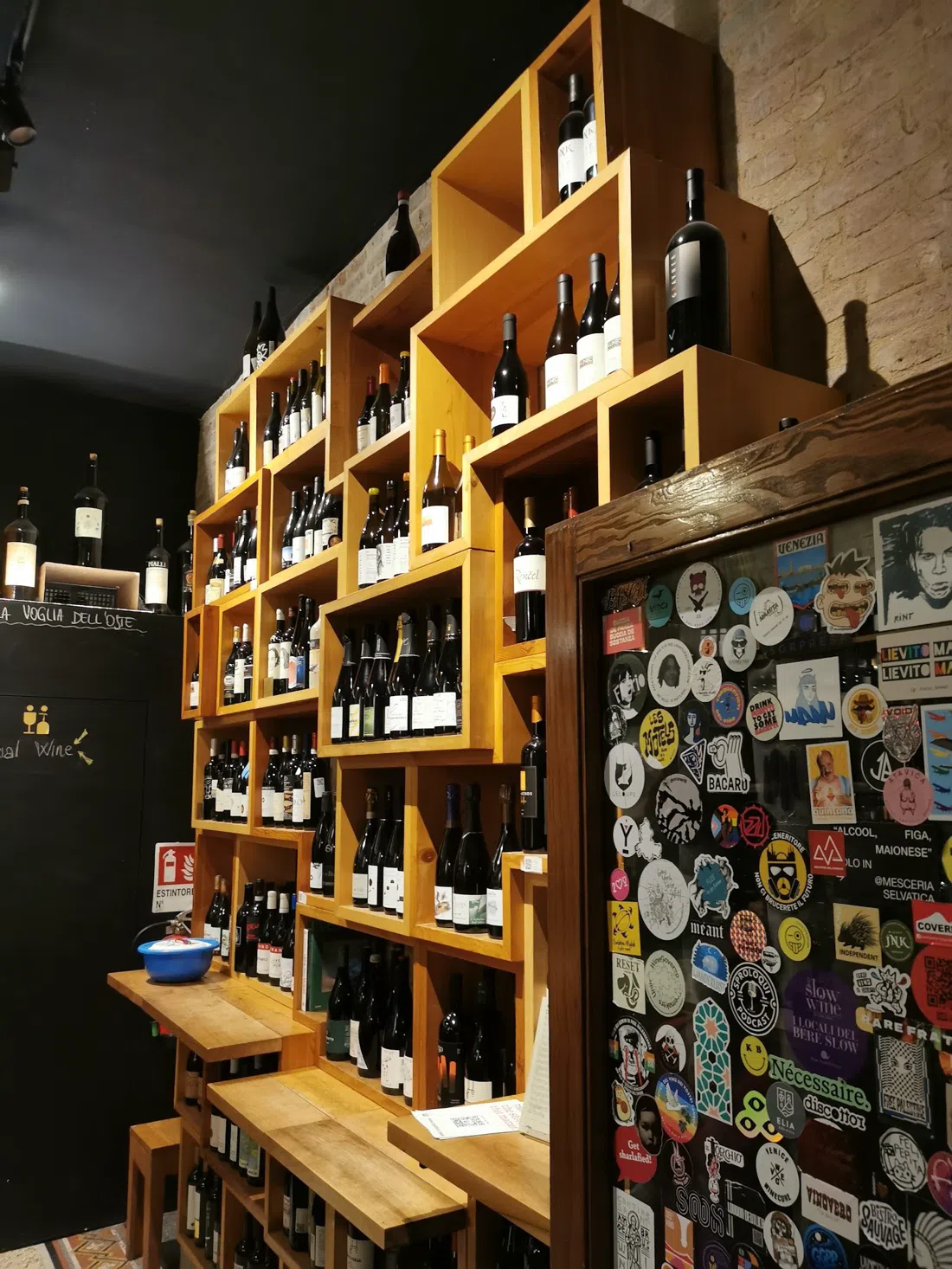
In Cannaregio, Vino Vero (Fondamenta della Misericordia) is Venice's original natural-wine bacaro — over 600 bottles, a serious list for a place this unassuming. The interior is small; most drinking happens standing along the fondamenta outside, which works fine for groups as long as the weather cooperates. Wine from €4 a glass, cicchetti €3-6. This is a genuine locals' evening fixture rather than a tourist add-on, and it shows in the crowd.
Cannaregio After Dark: The One Built for Lingering
If you want somewhere to actually sit down mid-crawl without booking a table, Al Timon (Fondamenta degli Ormesini, Cannaregio) is the answer. It has boat-deck seating moored right on the canal plus standing room on the fondamenta, and it's the one stop on this entire route genuinely built for a late, lingering group rather than a quick glass and move on. Arrive before 6pm if you want a boat spot — they go fast and don't come back once the evening crowd arrives. Cicchetti €2-4, wine €3-5, beer from €4. This is the social heart of Cannaregio after dark, and it's worth parking here for an hour rather than treating it as a five-minute stop.
For Groups Who Want an Actual Table
Most bacari simply don't do reservations or seating for six-plus people, which is worth knowing before you show up with a big group expecting a booth. Two exceptions on this list solve that problem.
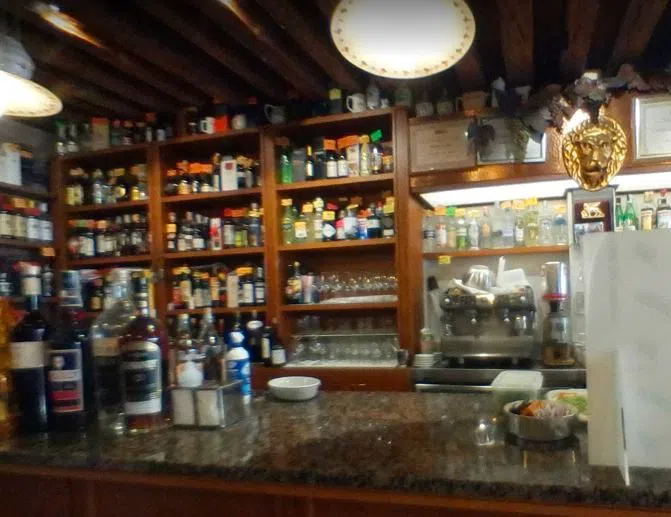
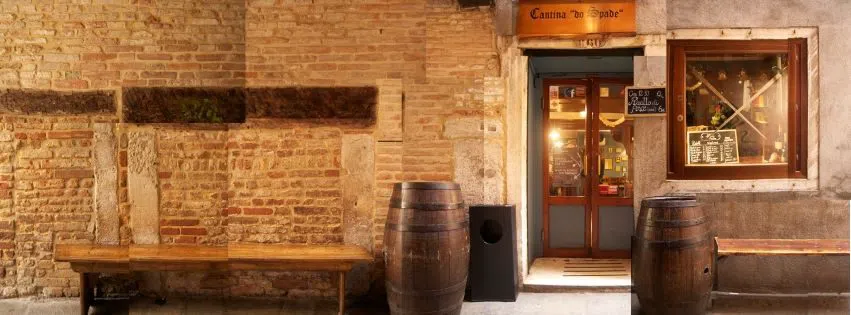
Cantina Do Spade (San Polo, near Rialto) has a small bar counter plus a handful of tables, and groups of four to six are workable if you reserve the tables ahead. It's also open into the evening — a second sitting runs 6-10pm — which puts it ahead of most neighbours that shut by mid-afternoon and makes it one of the few genuinely built for an after-dark route rather than a lunchtime one. Cicchetti €2-4, mains €12-18 if you want more than a snack.
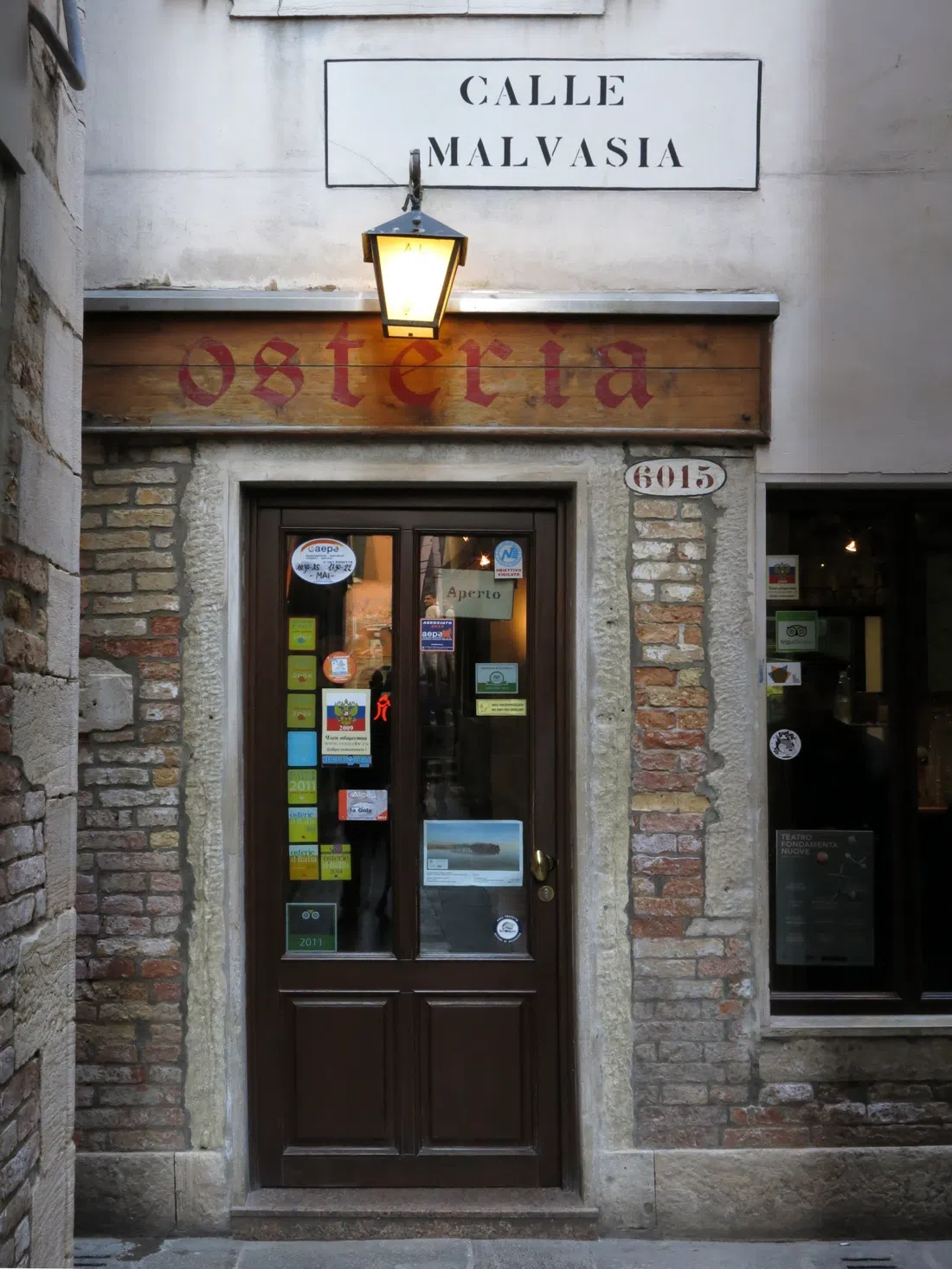
In Castello, Osteria al Portego (near Campo Santa Maria Formosa) splits itself cleanly: the front bar is standing-only and gets packed early, but the back room has proper reservable tables for a sit-down group dinner — one of very few on this list that offers that combination. Cicchetti €1.50-3.50, mains €15-22. Reliable and unpretentious rather than showy, which is exactly what you want after four stops of standing.
The Grease Stop
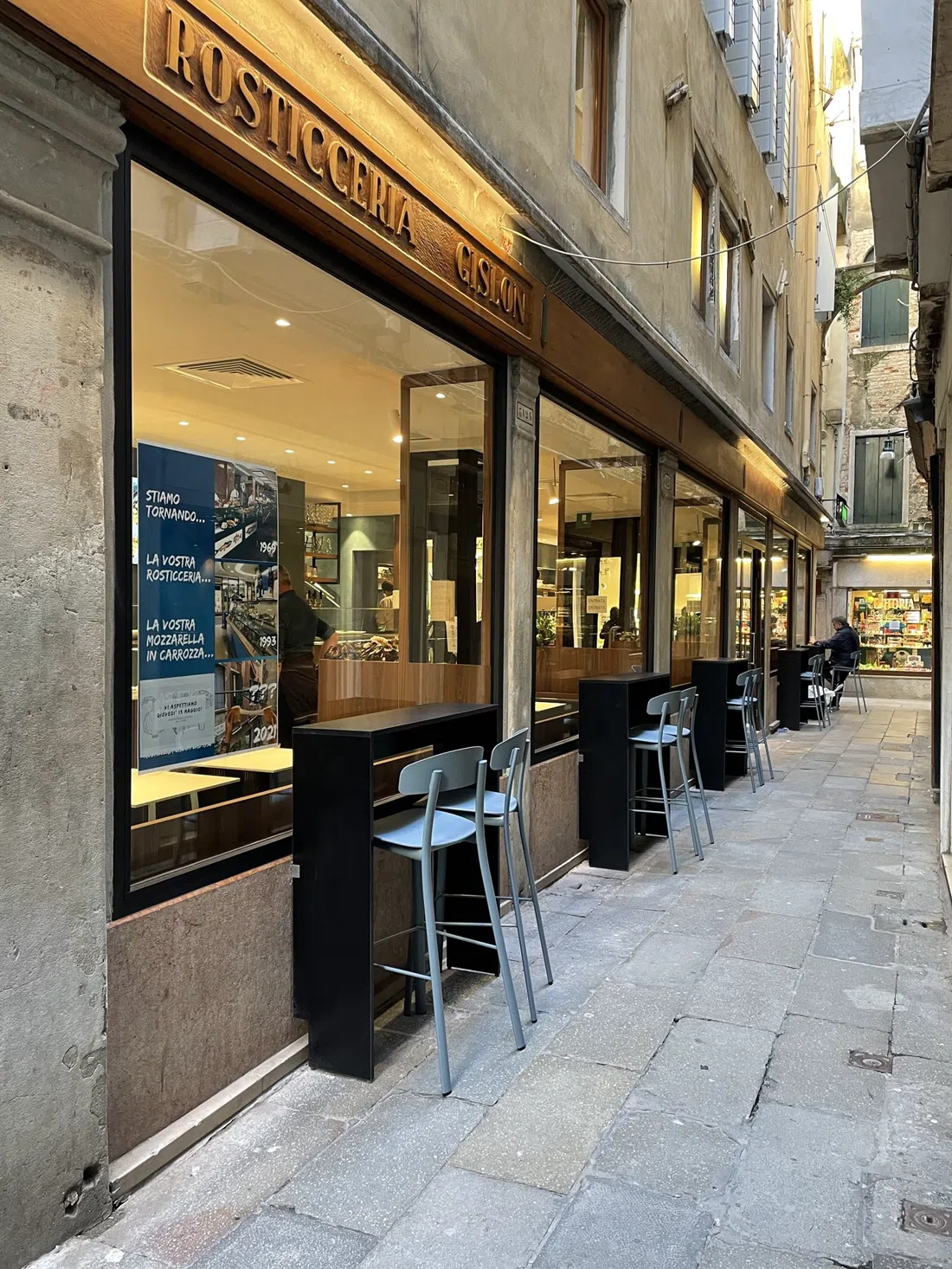
No crawl survives on wine and toothpicks alone. Rosticceria Gislon (San Polo, near Rialto) is counter-service only, no real seating, built for grabbing fried mozzarella in carrozza or a paper cone of seafood and eating it standing or walking. It's the crawl's late-night ballast — €2-6 an item — and it stays open to 9:30pm daily, which makes it useful as a mid-route stomach-liner rather than an endpoint. Fine for groups to grab and go; don't expect to sit as one.
When You Want the Cicchetti Idea as a Real Dinner
If standing all night isn't the plan, two places upgrade the concept into an actual sit-down meal, both requiring you to think ahead.
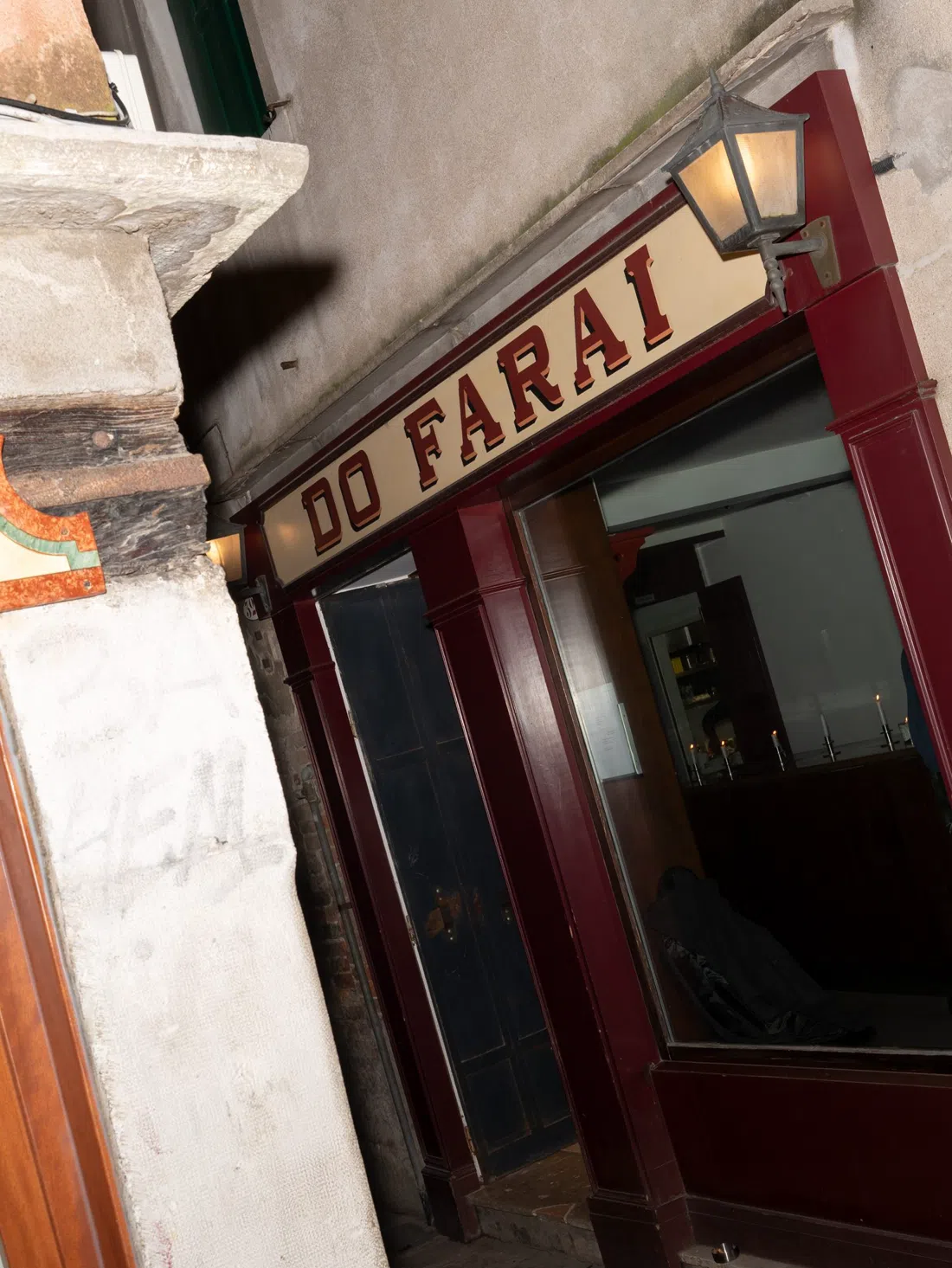
Ai Do Farai (Dorsoduro, near the Accademia) is a proper seafood osteria with outdoor tables, running on old-recipe dishes since 2001. It takes groups, but only with a reservation — walk-ins on a Friday night will be turned away. Cicchetti-style starters run €8-14, mains €18-28. Think of it as the dinner-stop upgrade from the standing bacari earlier in the route.
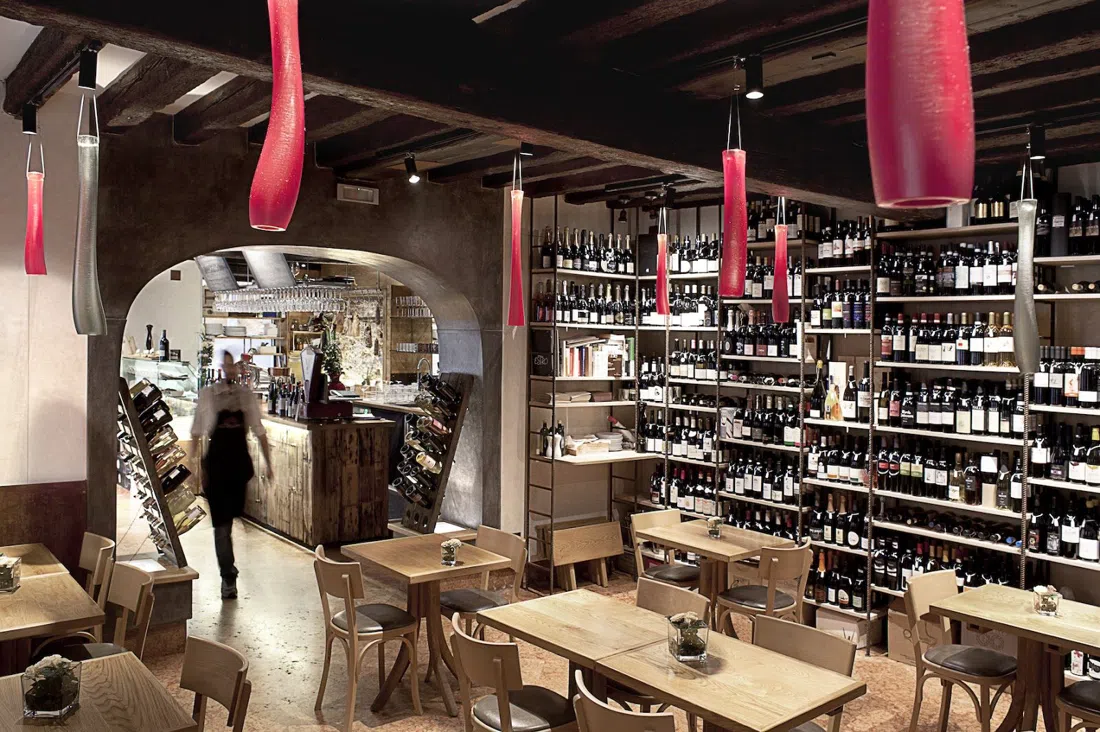
Estro Vino e Cucina (Dorsoduro) takes that further — a Michelin-listed natural wine bar and restaurant for readers who want the cicchetti idea elevated into a full evening. Booking is self-managed, meaning you call ahead directly rather than use an online system, so phone rather than assume a table will be free. Small plates €10-18, wine from €6 a glass. Closed Tuesdays — plan around it.
The Late-Night Finale
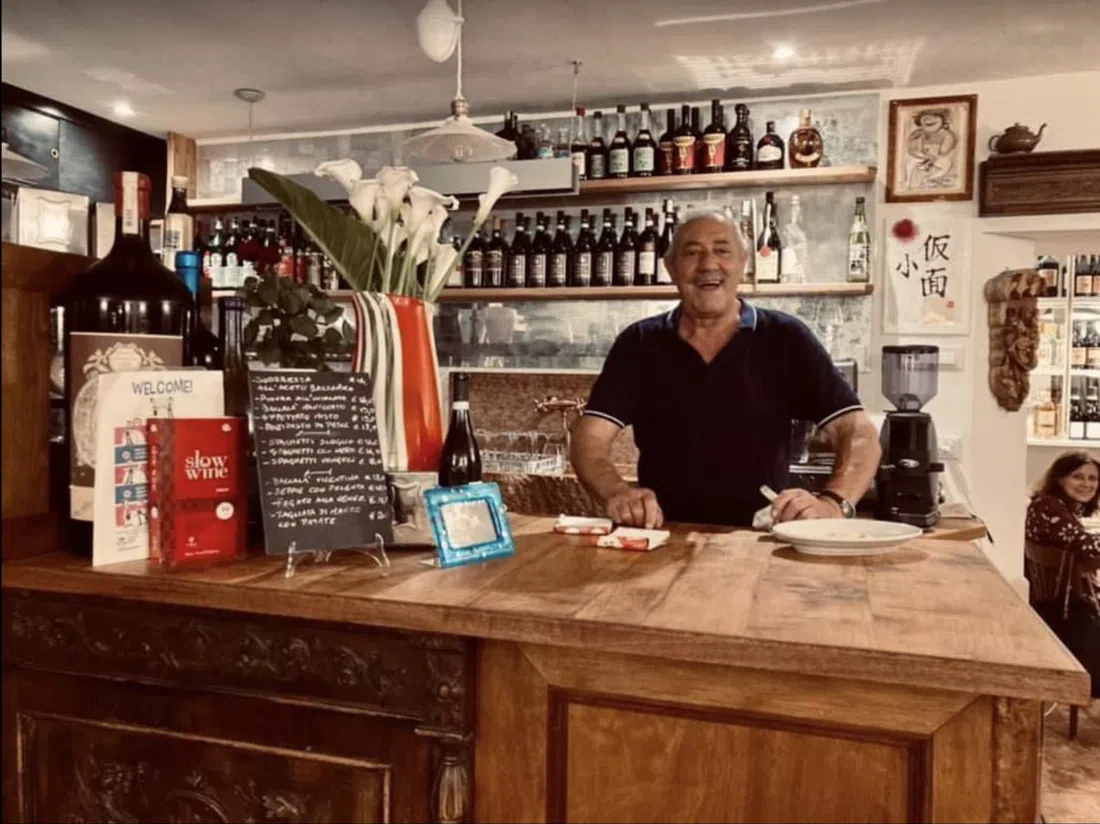
Everything on this list shuts by 9:30pm at the latest except one. Osteria Enoteca Mascareta (Castello, Rio Terà de le Muneghe) runs from 7pm to 2am, and it's built specifically for the crowd still going after everywhere else has pulled the shutters down. It's a sit-down room and takes groups with a booking — worth making one if you're arriving after 10pm, when it fills with people who've finished dinner elsewhere and come for the cellar. Owner Mauro Lorenzon runs the room with genuine showmanship, and the list runs deep — wine €5-15 a glass, cicchetti and small plates €8-16. This is where the night should end, not where it should start.
The Practical Bit
Timing: Start the crawl by 6pm if you want to hit the early closers (Do Mori, Squero, Lele) before they shut. Treat 6-8pm as your standing-bacaro window, 8-10pm as your sit-down or dinner window, and anything after 10pm belongs to Mascareta alone. Don't try to hit all thirteen in one night — six or seven is a realistic, still-standing-at-the-end number.
Cash: Most bacari are card-friendly now, but a handful of the oldest and cheapest — Do Mori, Bacareto da Lele, the Cantinone — still run faster and smoother with small cash, especially at peak hours when the person behind the counter doesn't have time to wait on a contactless terminal. Carry €40-50 in small notes and coins.
Budget: A full standing crawl of five or six bacari, two to three cicchetti and a glass of wine at each, runs roughly €40-60 a person. Add a sit-down dinner stop at Ai Do Farai or Estro and budget another €35-50 on top.
Groups: Anything over four people should assume standing room only at most stops on this list — Al Mercà, the Cantinone, Al Squero, Vino Vero, Bacareto da Lele. If you're travelling as six or more and want to sit together at some point, build the night around Cantina Do Spade, Osteria al Portego's back room, or a reservation at Mascareta, and treat everywhere else as a stand-and-move stop.
Getting around: Every stop on this route is walkable from Rialto or the Accademia bridge — this is not a vaporetto crawl. Wear shoes that handle bridges and uneven stone, and budget more walking time than Google Maps suggests; Venice's alleys don't move in straight lines.
Where to stay: Basing yourself near San Polo or Dorsoduro puts you within a 15-20 minute walk of almost every stop on this list. Start your search with the Venice hotel search, and for the rest of what the city's actually good for beyond bacari, the Venice guide covers it.
The crawl doesn't end when you decide it does — it ends when the last bacaro pulls its shutter down. Plan around that, not around your own schedule, and you'll drink the way the city actually drinks.